SLS: Successful test for world’s most powerful rocket

Nasa has carried out a successful test on part of the most powerful rocket in existence – the Space Launch System (SLS).

Engines on the rocket’s “core stage” were kept running for more than eight minutes – simulating the time it takes the SLS to go from the ground to space.

It’s the second such test for the biggest segment of the SLS, after an attempt in January shut down early.

The SLS is to send humans to the lunar surface for the first time since 1972.

The mission is part of Nasa’s Artemis project, launched by the Trump administration in 2017.

The launcher consists of the orange core, with its four powerful RS-25 engines, and two boosters attached to the sides.

Nasa finds cause of ‘megarocket’ test shutdown
‘Megarocket’ engine test ends early
Nasa’s giant SLS rocket: a guide
Artemis: To the Moon and beyond
The test at Stennis Space Center, near Bay St Louis, Mississippi, began at 16:37 ET (20:37 GMT). The core was attached to a giant structure called the B-2 test stand.

A massive plume of exhaust expanded from the stand as the engines shook the ground. The cloud was so enormous, it was spotted from space by the Goes-16 satellite.

Although the target was to fire the engines for eight minutes, teams from Nasa and prime contractor Boeing only had to keep them on for 250 seconds (four minutes) in order to gather all the engineering data they needed.

“It was a great day and a great test,” said acting Nasa administrator Steve Jurczyk.

The chair of the US House Committee on Science, Space and Technology congratulated Nasa on the successful test. Texas democrat Eddie Bernice Johnson said: “Achieving this significant milestone is a story of tenacity and dedication.”

She added: “Today’s successful test brings us one step closer to returning American astronauts to the Moon in preparation for the human exploration of Mars.”

The core that was part of Thursday’s test will be used for the maiden flight of the SLS – currently scheduled for late 2021.

In the 1960s, the stand tested engines used in the massive Saturn V rocket that launched the Apollo astronauts to the Moon.

John Shannon, Boeing’s vice president and program manager for the SLS, told me before the first hotfire attempt: “When the engines start and then throttle up, we will do what’s called a gimbal profile at 60 seconds. The engine nozzles move in a pre-programmed set of movements.”

This gimbal movement of the nozzles allows the rocket to be steered during flight.

Nasa’s new ‘megarocket’ set for critical tests
“This is the most heavily instrumented vehicle we will ever fly so we will get a tremendous amount of engineering data on vibration and temperature and stress, acoustics,” said Mr Shannon.

Before Thursday’s hotfire, engineers filled the core stage with more than 700,000 gallons (2.6 million litres) of propellant.

That propellant consisted of liquid hydrogen, which is the rocket’s fuel, and liquid oxygen, which helps the fuel burn. They react explosively inside the engines, generating super-heated water vapour from the exhaust.

When they’re fed to the engines, the propellants are at more than two hundred degrees below zero (F), but the exhaust that emerges is 6,000F (3,316C) – hot enough to boil iron.

Hundreds of thousands of gallons of water were directed into the flame bucket to cool the exhaust. In addition, tens of thousands of gallons were used to create a water “curtain” around the engines to suppress the noise generated when they fire for eight minutes.

This was done to protect the core stage from vibrations while it is anchored to the stand.

The RS-25s, built by California-based Aerojet Rocketdyne, are the same ones that powered the space shuttle.

The engines tested on Thursday contributed to 21 successful shuttle flights over the vehicle’s 30-year operational history.

Two were used on the last space shuttle mission, STS-135 in 2011. One flew on the 1998 mission that launched the oldest person ever to go to space – US senator and Project Mercury astronaut John Glenn, who was 77 at the time. The other was used on one of the flights to service the Hubble Space Telescope.

The engines were refurbished following shuttle missions, but they will be discarded after the maiden flight of the SLS later this year.

That mission, called Artemis-1, will send Nasa’s next-generation crew vehicle, Orion, around the Moon to thoroughly test its systems.

Tom Whitmeyer, from Exploration Systems Development at Nasa, said it would take about a month to refurbish the core stage, after which it would be put on a ship to Kennedy Space Center in Florida to prepare it for launch.

Here, it will be installed on a structure called the mobile launcher between the two booster rockets, completing the SLS vehicle.
Super Nintendo World opens in Japan after Covid delays

A theme park dedicated to Nintendo’s famous Super Mario World has opened in Japan, nearly a year after it was originally due to welcome guests.

Super Nintendo World – which cost about $0.5bn ($0.36bn) to build – was meant to open last summer but was delayed by the coronavirus pandemic.

Initially only Japanese visitors can go amid international travel bans.

For Nintendo, it represents part of a move from games firm to entertainment company.

At first the park will take half of the visitors it can accommodate to comply with social-distancing measures. Visitors will need to wear masks in most areas.

The park is modelled on levels in Nintendo’s Mario games, the first of which was released in 1985 and followed the adventures of a plumber and his brother

The franchise went on to sell more than 370 million games globally.

BBC Archive: Inside Nintendo, 1990
One of the most popular rides in the new theme park will feature a Mario Kart race, which visitors will ride sporting an augmented reality headset attached to a red cap.

And the park itself is a gaming experience, with visitors encouraged to buy wristbands to collect keys, redeem coins, play mini-games around the land and even team up with other visitors via a smartphone app.

Three more Super Nintendo World parks are being built at Universal Studios in LA, Orlando and in Singapore.

Australia: Sex consent app proposal sparks backlash

Australians have derided a suggestion by the New South Wales (NSW) police commissioner that an app could be used to register sexual consent.

On Thursday, Mick Fuller championed the idea of an app where people could digitally record their mutual agreement to have sex.

He said the technology could be used to establish “positive consent”.

But many people have criticised the proposal as short-sighted and potentially open to abuse.

Concerns have also been raised about whether it could be used for state surveillance.

In recent weeks, Australians have reignited a national discussion about sexual assault, abuse and harassment of women, and on Monday tens of thousands of people around the nation marched in protest

NSW Police, in introducing the app idea on Thursday, said it was aimed at normalising the act of seeking explicit consent.

“You may have a son or a brother and you think this is too challenging but this app… protects everybody,” Commissioner Mick Fuller told the Nine Network.

He said the need to prove explicit consent was a consistent problem in sexual assault court cases, and that an app’s record could help achieve better legal outcomes for victims. He added that the idea had been raised with the NSW government.

Less than 10% of the near 15,000 sexual assault cases reported to NSW police last year resulted in police charges, he said.

“It needs to be positive consent. How do we do that in this day and age? One option is with technology,” he wrote in Sydney newspaper The Daily Telegraph.

But women’s advocates have pointed out that the app’s use in reality could pose many problems. They said a consent record could be superseded simply if someone changed their mind, or it could be faked.

“The abuser can simply coerce the victim to use the app,” tweeted the head of the state’s domestic violence service Women’s Safety NSW.

Female lawmakers also criticised the app as inadequate compared to efforts to improve sexual assault laws for victims, and improve awareness.

“We need consent law reform, we need holistic education, we need to stop men feeling they are entitled to whatever they want… WE DO NOT NEED AN APP!!” tweeted Greens MP Jenny Leong.

A similar app by a private company was released in Denmark earlier this year after the country criminalised sex without explicit consent, but it was widely panned by the public and press.

Australia has in recent weeks seen a raft of publicly-aired sexual assault allegations which have centred on its parliament, as well as schools and workplaces.

In NSW a schoolgirls’ campaign is also lobbying for the school curriculum to be updated on sexual consent.

Thousands of young women have detailed their experience of sexual assault during their schooling years – with many noting they weren’t certain of what constituted rape.

5G auction to boost mobile speed and coverage

The auction of the airwaves that will create faster mobile services for rural areas and hasten the rollout of 5G has ended, with all four operators pleased with their haul.

The sell-off of chunks of spectrum in the 700-megahertz and 3.6-3.8-gigahertz bands raised £1.3bn for the government.

EE, Three, O2 and Vodafone all gained a share, much of which will be used to boost their 5G networks.

Ofcom said it should also improve coverage.

‘Transformative effect’
The 700MHz band is best suited to rural and in-building coverage, while the 3.6-3.8GHz frequencies are better for 5G as they allow greater levels of data transfer.

Ofcom group director of spectrum Philip Marnick said: “This is an important step forward in bringing better mobile services to people wherever they live, work and travel.”

Three said it had won enough of the 700MHz band to triple the amount of low-frequency spectrum it owned.

“It will have a transformative effect on our customers’ experience indoors and in rural areas”, it said.

‘High-speed connectivity’
EE and O2, meanwhile, gained spectrum in both bands, which they said would be used to grow their 5G networks.

And Vodafone acquired spectrum in the 3.6-3.8GHz band, which it said would bring “high-speed connectivity and open up new opportunities for products and services”.

The price raised is small compared with previous auctions. The 4G spectrum sell-off raised £2.3bn for the government, while the 3G auction netted £22.5bn.

“The swift conclusion of the auction and the relatively modest overall spend is good news for UK 5G,” CCS Insight analyst Kester Mann said.

The auction will now enter an assignment phase, which will see the operators jockeying for position within their frequency bands.

And this could prove more controversial.

“This process may be more competitive than in previous auctions, as Vodafone and O2, for example, reportedly expressed concern at the fragmented nature of the sale,” Mr Mann said.

Instagram cracks down on adults messaging teens

Instagram is adding safety measures designed to protect teenagers from unwanted direct messages from adults.

Older users will be able to privately message teenagers who follow them only.

And messages will be overlaid with a notice reminding teenagers they need not respond to anything that makes them uncomfortable.

The measures will work only if accounts have users’ correct ages, which young people sometimes lie about to avoid restrictions on what they can see.

Likewise, predators might pretend to be younger than they actually are.

Instagram said it was developing “new artificial intelligence and machine learning technology” to help tackle the challenge of age verification, especially in cases where account holders have not been honest.

Private account
The minimum age for using Instagram is officially 13.

The platform also said it now offered young account holders the option to make their accounts private when they created them.

“If the teen doesn’t choose ‘private’ when signing up, we send them a notification later on, highlighting the benefits of a private account and reminding them to check their settings,” it blogged.

In January, rival TikTok announced:

under-16s’ accounts would be made private by default
13-15-year-olds would be able to approve “friends” for comments and choose whether to make videos public
The UK’s proposed Online Harms Bill would give regulator Ofcom the power to block online services that fail to protect children – but it is unlikely to become law before 2022.

Related Topics

Microsoft Mesh: Will it change how we collaborate?

Mixed-reality platform, Microsoft Mesh, will allow people to join and share the same virtual experience wherever they are in the world.

The system was announced at the company’s Ignite digital conference, earlier this month.

While augmented reality overlays virtual objects in front of you, mixed reality allows the user to interact with what they can see and the assets are anchored in the real world.

The system can be accessed through a range of devices including Microsoft Hololens 2, virtual reality headsets, computers and even a smartphone.

But how could it change the way we work, play games and be entertained? BBC Click’s Omar Mehtab finds out more.

Women’s safety: Smartphone tips shared online

People in the UK have been sharing personal safety tips on social media following the death of Sarah Everard who disappeared as she walked home from a friend’s house in south London last week.

Police have confirmed that a body found in woodland near Ashford in Kent is that of the 33-year-old marketing executive.

Metropolitan police commissioner Dame Cressida Dick has said it is “thankfully incredibly rare” for women to be abducted on the streets of London, but women around the country have shared experiences of facing fear or intimidation.

Useful phone features shared include those already built into many smartphones and popular apps, such as shortcuts to emergency call access and temporary location-tracking services.

Emergency call shortcuts
On most smartphones, the unlock screen will include an emergency call button without the need to unlock the device.

On some, pressing the on button and a volume key can also bring up a shortcut to 999.

On an iPhone 8 or above, continuing to hold these buttons down will sound an alert and start a countdown from three, and if the buttons remain pressed the call will be made automatically. iPhone users can also say the number 14 to the voice assistant Siri, which will then ask whether you want to make an emergency call – although in some countries it will connect straightaway.

Emergency contacts can be set up via the iPhone health app – and the people you choose will be notified if an emergency call is made.

Google’s safety app, available on its Pixel handsets, has a similar function.

Samsung’s emergency mode is designed to prolong battery life while keeping the phone on standby. It limits features and the home screen is displayed as black but it enables emergency calls, calls to an emergency contact, and location-sharing within a message using minimal power.

Location-sharing
There are a number of location tracker apps available to download, and they are popular – but not everybody wants to be tracked all the time.

WhatsApp users can choose a contact, hit the attachment button to the right of the text box and select “location” – this will share the location of the device, only with the person they are messaging, for a certain period of time, ranging from 15 minutes to eight hours.

On an Android phone, if the emergency location service is switched on (it’s within settings, under the location tab), the device will automatically share its location with the emergency services during a call.

An iPhone will automatically ping its location once the emergency call is finished, but this can be cancelled by the phone owner.

‘Hey Siri, I’m being pulled over’

This iPhone shortcut was not made by Apple itself and was first shared on Reddit in 2018 but has surged in popularity in the US since the protests over the death of George Floyd.

It’s designed for car drivers, it requires downloading, it only works on the operating system iOS 12 and above – and certain permissions will have to be activated first. There is no official equivalent for Android, although it is possible to create your own rules for the Google voice assistant.

However, if you’ve jumped through those hoops, detailed here by The Verge, saying “Hey Siri, I’m being pulled over” will result in the phone screen dimming, pausing any music that’s playing, activating do not disturb and starting a video recording through the front-facing camera.

The handset will also send an automated message to a chosen emergency contact saying that the owner has been pulled over, and giving their location.

In an interview with Business Insider, its creator Robert Peterson described it as “the civilian equivalent” to police-worn body cameras.

What are NFTs and why are some worth millions?

A digital-only artwork has sold at Christie’s auction house for an eye-watering $69m (£50m) – but the winning bidder will not receive a sculpture, painting or even a print.

Instead, they get a unique digital token known as an NFT.

Where Bitcoin was hailed as the digital answer to currency, NFTs are now being touted as the digital answer to collectables.

But there are plenty of sceptics who think it is all a bubble that is going to burst.

What is an NFT?
NFT stands for non-fungible token.

In economics, a fungible asset is something with units that can be readily interchanged – like money.

With money, you can swap a £10 note for two £5 notes and it will have the same value.

However, if something is non-fungible, this is impossible – it means it has unique properties so it cannot be interchanged with something else.

It could be a house, or a painting such as the Mona Lisa, which is one of a kind. You can take a photo of the painting or buy a print but there will only ever be the one original painting.

NFTs are “one-of-a-kind” assets in the digital world that can be bought and sold like any other piece of property, but they have no tangible form of their own.

The digital tokens can be thought of as certificates of ownership for virtual or physical assets.

How do NFTs work?
Traditional works of art such as paintings are valuable because they are one of a kind.

But digital files can be easily and endlessly duplicated.

With NFTs, artwork can be “tokenised” to create a digital certificate of ownership that can be bought and sold.

As with crypto-currency, a record of who owns what is stored on a shared ledger known as the blockchain.

The records cannot be forged because the ledger is maintained by thousands of computers around the world.

NFTs can also contain smart contracts that may give the artist, for example, a cut of any future sale of the token.

What’s stopping people copying the digital art?
Nothing. Millions of people have seen Beeple’s art that sold for $69m and the image has been copied and shared countless times.

In many cases, the artist even retains the copyright ownership of their work, so they can continue to produce and sell copies.

But the buyer of the NFT owns a “token” that proves they own the “original” work.

Some people compare it to buying an autographed print.

People are paying millions of dollars for tokens?
Yes. It’s as wild as it sounds.

How much are NFTs worth?
In theory, anybody can tokenise their work to sell as an NFT but interest has been fuelled by recent headlines of multi-million-dollar sales.

On 19 February, an animated Gif of Nyan Cat – a 2011 meme of a flying pop-tart cat – sold for more than $500,000.

A few weeks later, musician Grimes sold some of her digital art for more than $6m.

It is not just art that is tokenised and sold. Twitter’s founder Jack Dorsey has promoted an NFT of the first-ever tweet, with bids hitting $2.5m.

Christie’s sale of an NFT by digital artist Beeple for $69m (£50m) set a new record for digital art.

But as with crypto-currencies, there are concerns about the environmental impact of maintaining the blockchain.

Is this just a bubble?
A day before his record-breaking auction, Beeple – whose real name is Mike Winkelmann – told the BBC: “I actually do think there will be a bubble, to be quite honest.

“And I think we could be in that bubble right now.”

Many are even more sceptical.

David Gerard, author of Attack of the 50-foot Blockchain, said he saw NFTs as buying “official collectables”, similar to trading cards.

“There are some artists absolutely making bank on this stuff… it’s just that you probably won’t,” he warned.

The people actually selling the NFTs are “crypto-grifters”, he said.

“The same guys who’ve always been at it, trying to come up with a new form of worthless magic bean that they can sell for money.”

Former Christie’s auctioneer Charles Allsopp said the concept of buying NFTs made “no sense”.

“The idea of buying something which isn’t there is just strange,” he told the BBC.

“I think people who invest in it are slight mugs, but I hope they don’t lose their money.”

Roblox: David Baszucki worth $4.6bn as shares soar

Chief executive of Roblox David Baszucki may well be letting out the “Oof” sound made famous by the game, after the firm’s debut on Wall Street netted him $4.6bn (£3.3bn).

The gaming platform has risen in value by 60% to $47bn after its first day of trading on the New York Stock Exchange.

It means it is worth more than some of biggest games publishers, including Take Two, Ubisoft and Electronic Arts.

Mr Baszucki said it would help create a digital world that went beyond gaming.

“To all those who helped us get one step closer to fulfilling our vision of the Metaverse – thank you,” he tweeted.

Roblox: How the children’s game became a $30bn bet on the Metaverse
Roblox game-makers must pay to die with an ‘oof’
The Metaverse is a science fiction concept for a series of interconnected digital worlds where people hang out, play games, work and learn.

The phrase was coined in the novel Snow Crash, where it served as a virtual-reality-based successor to the internet. The novel Ready Player One and its 2018 film adaptation depicted a similar idea in its “Oasis” and several games have attempted to create virtual worlds for real-world activities.

Roblox is the world’s largest user-generated games site. Players can also build and share online worlds. It is free to play, relying on purchases paid for in currency known as “robux” for its income.

Developers are also paid in the virtual currency, which can be converted back into cash. Last year more than 1,250 developers made $10,000 or more, with 300 making more than $100,000.

Billion-dollar year
The pandemic lockdowns made 2020 a huge year for the firm as children, cut off physically from their friends, flocked to Roblox for social interaction instead.

As well as a huge variety of games to play, visitors can also attend concerts, birthday parties and other events, meaning the average user spends more than two hours per day on the platform.

User numbers jumped 85% over the past year, and now stand at 37 million globally. Most are children aged 12 or under.

In 2020 the firm generated close to $1.2bn from the Apple App Store and Android’s Google Play store.

Craig Chapple, an analyst at research firm Sensor Tower, said its surge in value showed the huge confidence investors had in the firm.

“Roblox has executed superbly on its vision of enabling vast amounts of user-generated content, cross-platform play and a platform to connect with others.

“These are some of the big key games industry trends that other publishers are just now catching up on, where Roblox is already racing ahead.”

But he added there were challenges ahead.

“This includes increased scrutiny of the company’s business strategies and raising the average age of its young player base – but Roblox offers something unique in the market that’s not easy or quick to replicate.

“This new injection of funds is a bet from investors on bringing us a step closer to the Metaverse, like that depicted in Ready Player One.”

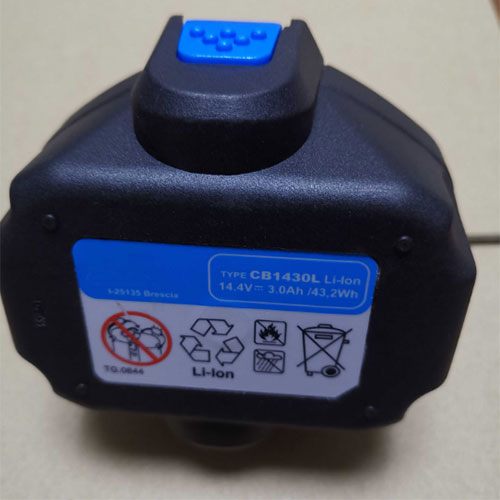
Battery CB1430L Replacement For Cembre Tools Cembre CB1430L Hydraulic clamp

Find the right battery for Cembre CB1430L Hydraulic clamp to solve your power issues. Our Cembre CB1430L batteries are manufactured to precisely fit just as your original battery.

We use the highest quality Li-ion cells and components that are lighter weight, charge faster and last longer.

US Cembre battery shop – Tech-Battery.com ! Shopping with us is safe and secure! 100% Guarantee Quality and Fully Test!

Cembre CB1430L Battery For Cembre – Battery For Cembre Tools Li-ion 3.0Ah 14.4V. Browse our various categories and find out why we have been the go-to source for our customers.

CB1430L
  • Chemistry: Li-ion
  • Voltage: 3.0Ah
  • Capacity: 14.4V

Free shipping in most countries. click here to view detailed shipping costs.

We ship to the worldwide,please enquiry shipping & handling if you are out of united states.

What’s the total delivery time? (please use this formula to determine when your order will arrive) total delivery time = packaging time + shipping time.

Replaces the following products:

Fits the following devices:

Cembre CB1430L Hydraulic clamp

Cembre CB1430L Cembre battery is replacement for Cembre CB1430L Hydraulic clamp. The CB1430L batteries equivalent is guaranteed to meet or exceed Cembre original specifications. All Cembre CB1430L Battery are brand new, 1 year Warranty, 100% Guarantee Quality and Fully Test!

We deliver quality Cembre Tools extended batteries online. Purchase your Cembre Tools battery here.

Cembre CB1430L Cembre Batteries

  • 100% OEM Compatible with your Cembre Tools.
  • Lithium Ion battery technology
  • Convenient and secure online purchasing
  • Dependable high quality Cembre batteries
  • Satisfaction guaranteed or your money back
  • 1 Year Warranty on all Cembre Tools Replacement Batteries

6 tips to increase CB1430L Cembre Battery lifetime

The performance of your Cembre depends largely on the performance of your battery. And his time of life depends on its users, and that you are. These are the principles that have guided the Cembre , at the head, so you can optimize the performance of Cembre Tools battery.
New battery still fully charged CB1430L sold. You must be on the first wheel to be conditioned for optimum performance. Loading and unloading of the battery 4 or 5 times is enough to determine.
The memory effect completely to avoid a full charge and discharge the battery, Cembre CB1430L twice a month.
The dirt on the Cembre CB1430L contacts of the battery can power the Cembre Tools batteries. Clean with alcohol and cotton can look like and function like new.
This method is recommended for those using the AC adapter for long periods. We recommend that you use the Cembre CB1430L battery at least once in two weeks. Batteries lose its charge when stored for a long time and you need the battery if it does break.
If he does not use a length of time, the Cembre CB1430L battery will be stored protected from a clean, dry and cool, heat and other metals. A loss of business to charge the battery in time and need a break before reuse.
Power Management Features Battery CB1430L enable the conservation of energy in the battery of Cembre Tools. You can control the speed of the processor off, or you can adjust the brightness of the LCD screen to a minimum to ensure low power consumption. 

Why we have been the go-to source for our customers ?

We stock a wide range of rechargeable batteries for Cembre Tools. Your Cembre Tablet PC is part of your everyday life. Successful communications on a Cembre begin with your battery. When purchasing a replacement battery for your Cembre Cembre, dependability and price are what we have to offer. We’ve been supplying reliable, high quality Cembre batteries for over 10 years. Our goal is to provide high quality aftermarket replacement batteries at a very reasonable price. All of our rechargeable Li-Ion Cembre batteries are backed by a one year warranty.

What is the run time of Cembre battery?

Cembre batteries have two main ratings on them: Volts and Amperes. Because size and weight of batteries is limited when compared to larger batteries such as car batteries, most companies show their ratings with Volts and Milliamperes. One thousand Milliamperes equals 1 Ampere. When buying a battery, select batteries with the most Milliamperes (or mAh). Batteries are also rated by Watt-Hours, perhaps the simplest rating of all. This is found by multiplying the Volts and the Amperes together. For example:

  • 14.4 Volts, 4000mAh (Note: 4000mAh is equal to 4.0 Amperes).
  • 14.4 x 4.0 = 57.60 Watt-Hours

Watt-Hours signifies the energy needed to power one watt for one hour.